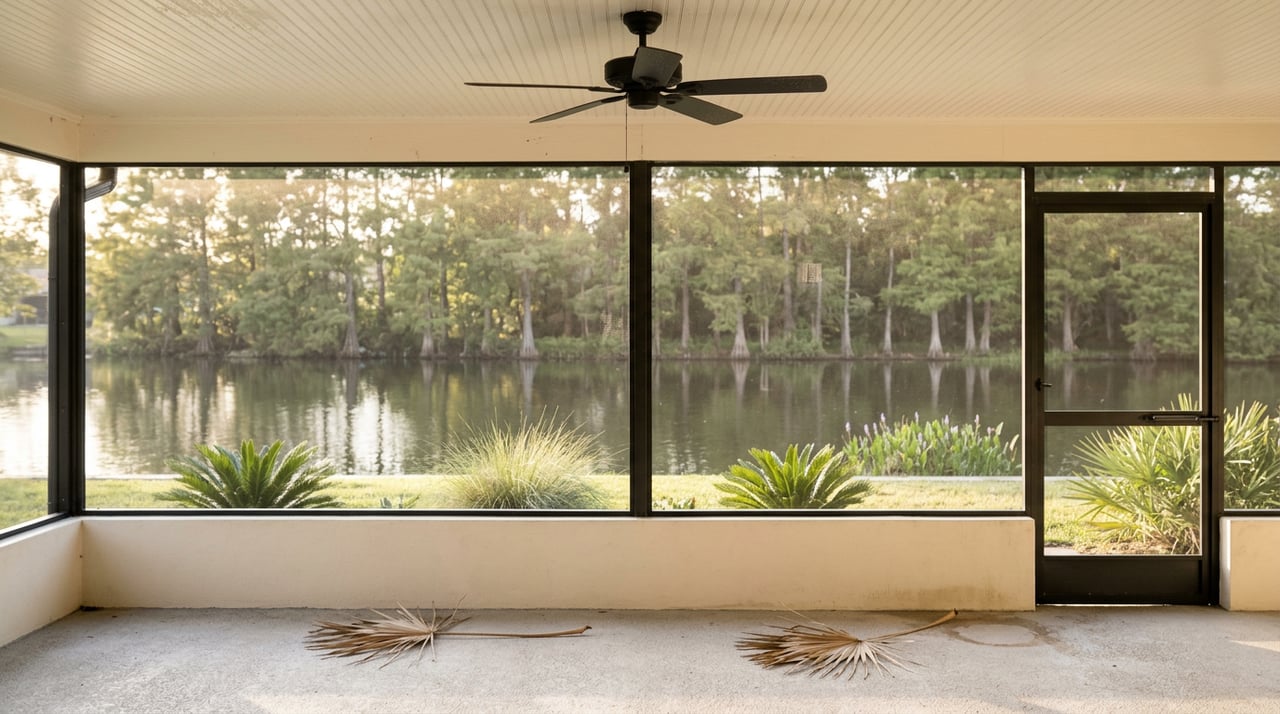
As described in a Citrus County Chronicle report, on a July morning near where the Halls River meets the Homosassa, a diver tethered to a barge is sucking decades of black muck off the bottom through a hose long enough to stretch three quarters of a mile back to shore. A few hundred yards downstream, a listing agent is photographing a canal home for sale, and the water behind the dock looks exactly the same shade of tea brown it has for years. Both of these places will show up on a buyer's search as "Homosassa waterfront." Only one of them has already been rebuilt.
That difference may not be apparent from a listing description, and it can mean two homes with nearly identical specs and nearly identical asking prices are on different value trajectories right now.
The River Is Being Rebuilt One Canal at a Time, Not All at Once
The Homosassa River lost roughly 90 percent of its native underwater vegetation over the decades, smothered by muck and a stringy invasive algae called Lyngbya. In 2018, a group of residents formed the Homosassa River Restoration Project and partnered with the aquatic restoration firm Sea & Shoreline to reverse it, using vacuum dredges to strip the organic muck off the river and canal bottoms and hand-planting eelgrass to hold the sediment in place and filter the water.
Here's the part that matters for a buyer comparing two listings: this work does not happen everywhere at once. It happens in mapped, funded phases, canal by canal.
| Phase | Status as of mid-2026 | What happened there |
|---|---|---|
| Phase 1 | Complete, then re-cleaned in 2024 | 23.69 acres restored, about 120 million pounds of muck removed, 130,445 eelgrass units planted. The Blue Water Loop Canal needed a second round of maintenance after some of the original grass didn't hold. |
| Phase 2 | Complete | An additional 9.8 acres vacuumed and replanted. |
| Phase 3 | Active right now | Crews are currently vacuuming and replanting near the Halls River confluence at roughly an acre a month. |
| Phase 4 | Permitting in its final stages | Work was expected to begin late summer 2026. |
| State park river bottom | Permitting nearing completion | A previously off-limits stretch, the "no boating" zone up to the pedestrian bridge, was finally close to getting cleared for restoration after years of trying. |
A home on a canal that finished Phase 1 in 2023 has had two to three years of clearer water, more visible fish, and a functioning grass bed. A home near the Halls River confluence, in the middle of Phase 3 right now, is watching the muck come out this season, with new grass that hasn't had time to root yet. A home a few hundred yards further out, still waiting on Phase 4 permitting, hasn't been touched at all. All three can carry the same "waterfront" listing language and a similar asking price. The comps don't know the difference. A buyer walking the dock does.
Jessica Mailliez, the senior environmental manager overseeing the work for Sea & Shoreline, put the pace in blunt terms: her crews are removing roughly an acre of sediment a month in active areas. She also pointed out why the calendar matters as much as the acreage. The work is scheduled around Florida Fish and Wildlife Commission manatee season restrictions, which limit in-water work in parts of the river from mid-November into spring, and around the boat traffic itself.
The Citrus County Chronicle quoted Mailliez describing the crowd during scallop season: "On any given weekend, there's going to be 300 boats up here, easy."
That's not a small detail. A canal can be technically "in restoration" and still get hammered by anchors, prop wash, and foot traffic before the new grass has a chance to root.
The Money Behind the Muck Isn't Guaranteed Year to Year
Restoration this scale doesn't run on goodwill alone. The project has drawn roughly $13 million in legislative appropriations since 2018, plus about $2 million a year from Florida Department of Environmental Protection grants, according to the project's founder and manager, Steve Minguy. That funding has come through every year since the group's first shaky start, when a veto delayed the initial money by a full year.
The 2026 season's funding came through the efforts of state Senator Ralph Massullo and Representative JJ Grow. Local businesses have pitched in too. Crump's Landing, the riverside restaurant, held its third annual "Pirate Invasion" fundraiser this February, with all proceeds going directly to the restoration effort.
Here's why this matters for anyone timing a purchase around a specific canal's restoration status: none of this funding is locked in for future years. It gets re-secured, legislative session by legislative session. A canal slated for Phase 5 or 6 restoration isn't on a guaranteed calendar. It's on a calendar that depends on continued state budget support and continued local advocacy showing up in Tallahassee.
Crystal River Already Ran This Experiment
Skeptical that a river restoration actually moves the needle on how a waterfront neighborhood is perceived? Homosassa didn't invent this playbook. In November 2016, a group of Homosassa residents toured the Kings Bay Restoration Project in nearby Crystal River, which had been underway since 2015. That project has since restored more than 45 acres of grass beds, and it became the direct model HRRP built its own approach on.
Kings Bay had a three-year head start. Homosassa is now a few years into following the same process on a comparable timeline. If you're trying to picture what a fully restored canal here might look and feel like in five or ten years, Kings Bay is the closest real answer, sitting one county road over.
What to Actually Ask Before You Write an Offer
As of August 2026, there were roughly 68 to 72 active waterfront listings in Homosassa, with a median list price in the $436,000 to $448,000 range and typical time on market running 125 to 148 days. Those numbers describe the whole waterfront market as one thing. It isn't one thing. It's a patchwork of canals and river frontage in different stages of a decade-long ecological rebuild.
Before you compare two listings on price per square foot alone, ask which phase the specific canal or creek falls under. Names to know if you're touring: the Blue Water Loop Canal has already been through a full restoration and a maintenance re-clean, while the stretch near the Halls River confluence is being worked on this season. Prices Creek, Mason Creek, and Battle Creek show up often in current listings as scenic, quieter water, but that doesn't tell you where they sit in the restoration queue. The same goes for canal-front lots near Riverhaven Village or deep in Old Homosassa. A listing photo of clear water on a sunny day doesn't confirm the canal has been restored. It might just be a good day.
This is also where a home inspection and a waterfront walk-through diverge. A standard inspection tells you about the seawall, the dock, and the structure. It won't tell you whether the water off your dock is two years into a grass bed establishing itself or still waiting on a permit. That's a local knowledge question, not a paperwork question, and it's exactly the kind of thing worth asking your agent to check against the project's public phase updates before you get attached to a specific address.
A Few Questions Worth Asking Directly
Does restoration status affect insurance or flood zone designation? No. The restoration project addresses water clarity and habitat, not elevation or flood risk. Those remain separate considerations tied to FEMA flood maps and elevation certificates, and should be reviewed on their own.
Can I just ask the seller which phase their canal is in? You can, and you should, but verify it independently. The restoration project publishes phase updates and maps of completed work, and cross-checking a seller's answer against that record takes the guesswork out of it.
Does a restored canal mean better boating access, or just clearer water? Mostly the latter, at least in the near term. The goal is water clarity, oxygen levels, and habitat, which improves fishing and the overall feel of the water. Depth and navigation access are separate physical characteristics of each waterway and don't change because a canal was restored.
If you're weighing a Homosassa waterfront purchase and want to know exactly where a property sits relative to this restoration timeline, that's a conversation worth having before you fall for a view. Laura Bush, PA has spent years tracking which stretches of the Nature Coast are changing and why. Reach out for a home valuation, and let's talk about the restoration timeline for a property you're considering.
This article is general information, not legal, tax or financial advice. Consult a qualified professional about your situation.